
Bibliotherapy
Bibliotherapy describes the use of reading or listening to books as a supportive companion to the healing journey. Books aren’t a replacement for therapy, but they can complement and reinforce insights between sessions. Books can deepen self-understanding and support emotional healing while offering clarity, validation, new perspectives, and practical tools.
The “Current Rotation” section highlights 3 - 4 of my top book recommendations at this time. This short list is updated every few months. The remainder of the page is organized by topic and includes resources I’ve found especially helpful in the healing process. Please visit the book reviews page to find past reviews.
This list is curated, not exhaustive. For current clients: I keep an extended list of books I’ve personally read and vetted, and am happy to discuss or recommend additional options.
On Current Rotation
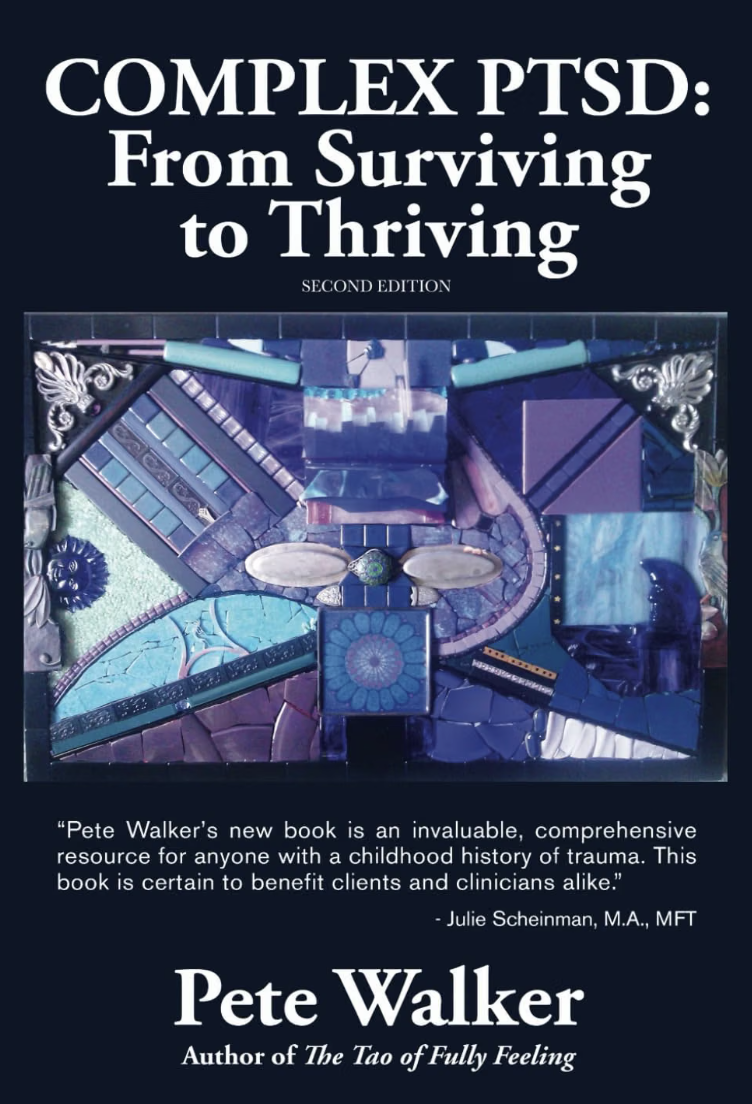
Peter Walker's book is a foundational text in complex PTSD, offering a practical and thoughtful guide for understanding and healing from childhood trauma. While complex PTSD can result from various forms of ongoing, repeated trauma, this book focuses on complex PTSD caused by childhood abuse, neglect, or emotional abandonment. It often develops in seemingly functioning households, making it frequently overlooked and its impact underestimated. Walker draws on his own experience and client stories, and offers many tools for recovery including working with toxic shame, the inner critic, emotional flashbacks, grief, and self-reparenting.
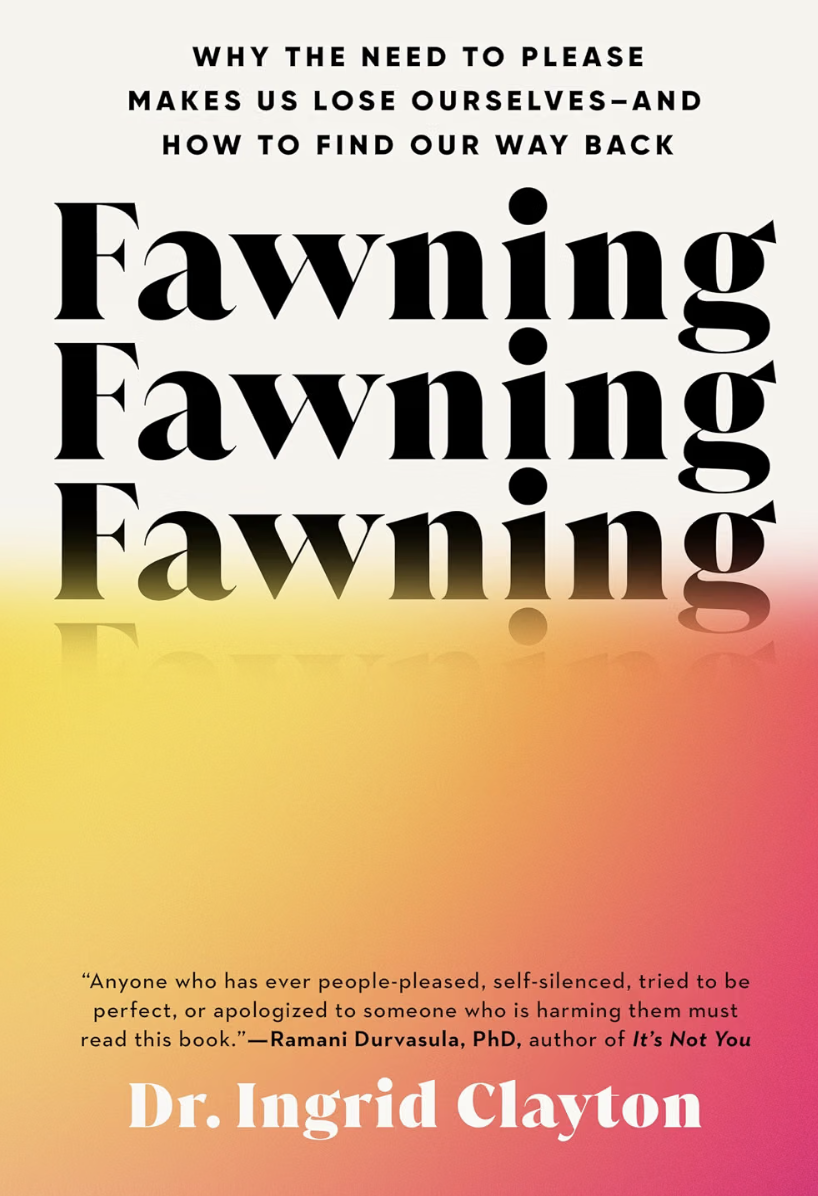
Clinician Dr. Ingrid Clayton explains a widely experienced yet rarely named trauma response called "fawning,” when we move toward, rather than away from, relationships that feel unsafe. What makes fawning particularly difficult to recognize is that its core behaviors like overgiving and self-sacrifice are traits our culture often rewards. Reflecting on her own experience and client stories, Dr. Clayton offers a compassionate path toward reclaiming one's sense of self and voice. She introduces tools such as somatic resourcing, EMDR, and parts work as pathways toward deeper healing.
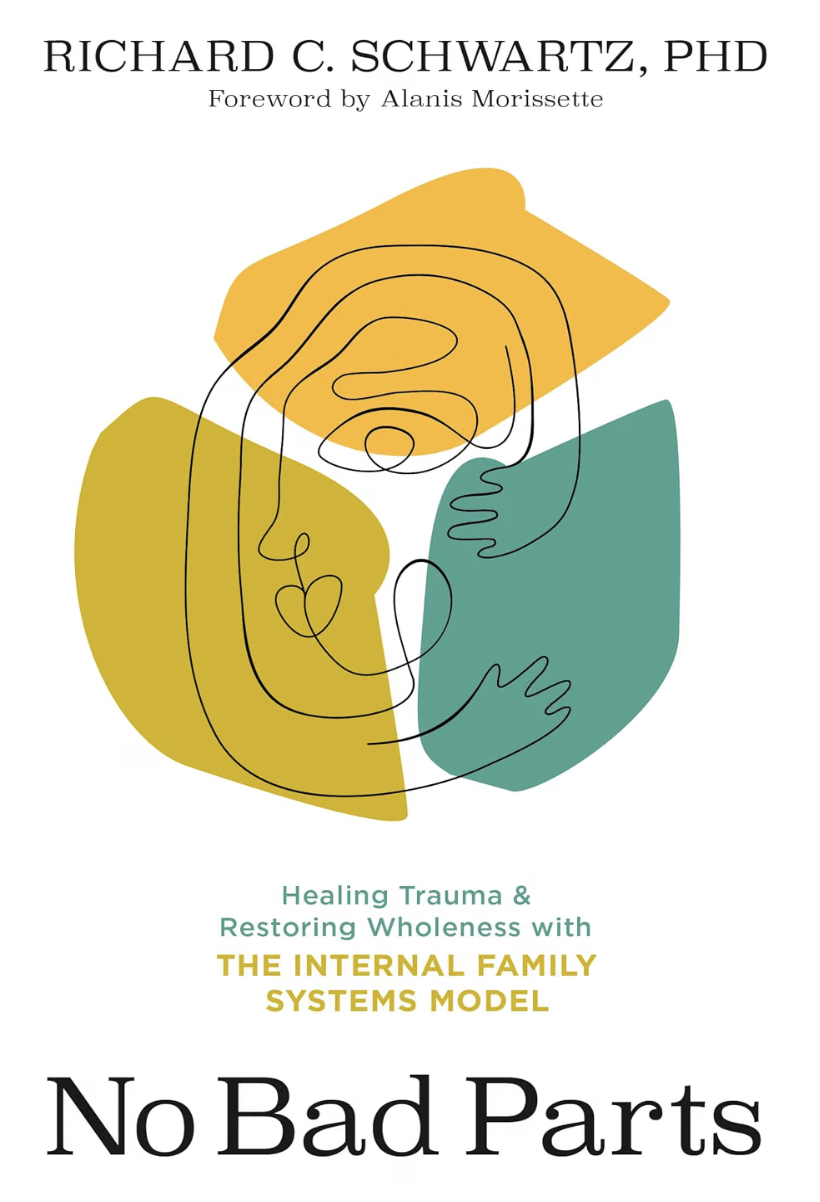
Dr. Richard Schwartz, developer of Internal Family Systems (IFS), brings this transformative framework to a general audience in an engaging read. IFS conceives the mind as naturally multiple, viewing multiplicity as healthy rather than pathological. We are each made up of protective and wounded inner parts, led by a core Self that cannot be damaged and knows how to heal. Through this journey we learn that even the most destructive parts are born out of a desire to protect us, and that there are therefore “no bad parts.” The book makes IFS concepts accessible and offers practical exercises to better understand your unique inner system.
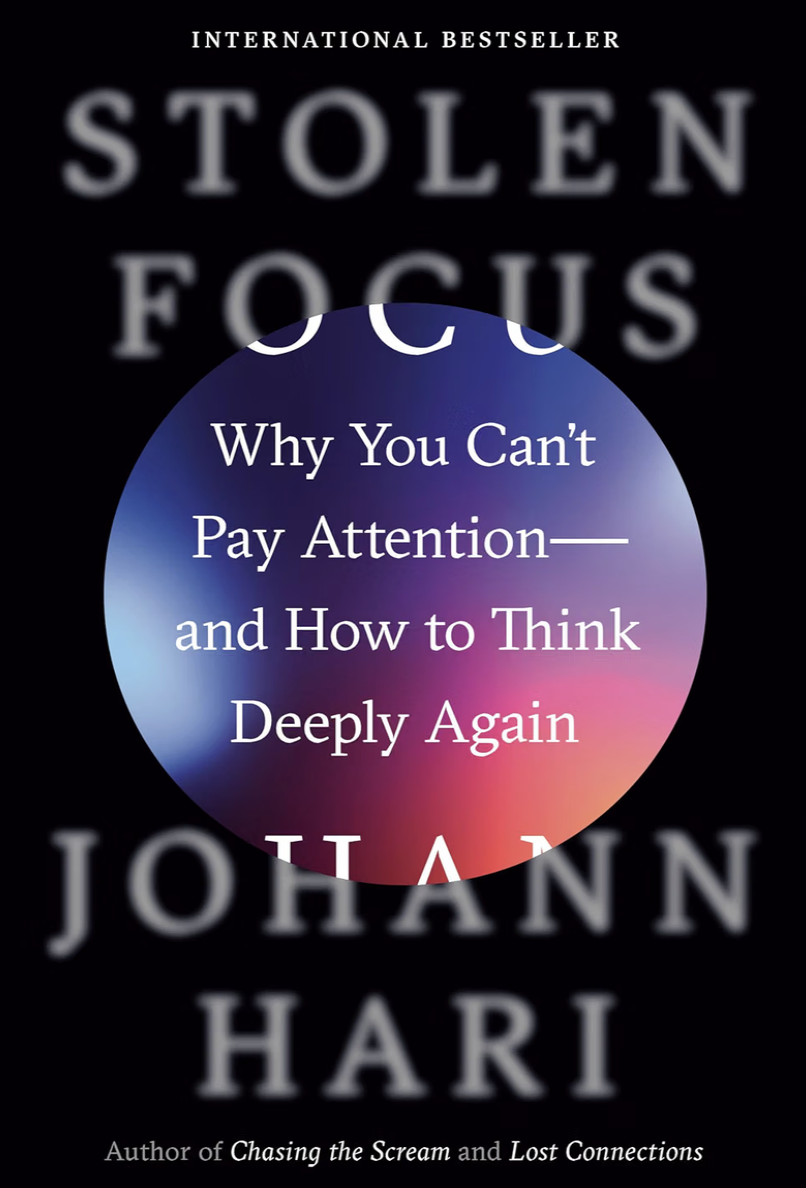
This is a thought-provoking read, exploring how systemic and environmental forces are eroding our ability to sustain attention; from technology designed to fragment focus, to sleep deprivation, nutritional deficiencies, and a pace of modern life that leaves little room for play and boredom. He also offers concrete suggestions for reclaiming attention, both individually and collectively. Note that I do not fully align with his views on ADHD, as he overstates environmental factors when the neurobiological basis is well-established. That caveat aside, a worthwhile read. His book Lost Connections is also a captivating read.
Books by Topic
-
Addiction
In the Realm of Hungry Ghost, Gabor Maté MD
Molecule of More, Daniel Lieberman MD & Michael Long
The Biology of Desire, Marc Lewis PhD
The Craving Mind, Judson Brewer
-
ADHD
ADHD 2.0, Edward Hallowell MD & John Ratey MD
Divergent Mind, Jenara Nerenberg
How to ADHD, Jessica McCabe
Scattered Minds, Gabor Maté MD
-
Belonging & Connection
How to be the Love you Seek, Nicola LePera PhD
Lost Connections, Johann Hari
The Enchanted Life & If Women Rose Rooted, Sharon Blackie
You Belong, Sebene Selassie
-
The Body
Eastern Body Western Mind, Anodea Judith
The Wisdom of your Body, Hillary McBride PhD
Your Body is not an Apology, Sonya Taylor
-
Boundaries & Communication
Energetic Boundaries, Cyndi Dale
Nonviolent Communication, Marshall Rosenberg PhD
Set Boundaries, Find Peace, Nedra Tawwab
-
EMDR
Every Memory Deserves Respect, Michael Baldwin & Deborah Korn PsyD
Getting Past your Past, Francine Shapiro PhD
-
Emotions
Atlas of the Heart, Brené Brown
Draw Your Feelings: A Creative Journal to Help Connect with Your Emotions through Art, Rukmini Poddar
How Emotions are Made, Lisa Barrett
Permission to Feel, Marc Brackett PhD
-
Grief
How to Carry What Can’t be Fixed: A Journal for Grief, Megan Devine LPC
It’s Ok That You’re Not Ok, Megan Devine LPC
-
Inner Child & Parts Work
Homecoming: Reclaiming & Healing Your Inner Child, John Bradshaw
No Bad Parts, Richard Schwartz PhD
Reconciliation, Thich Nhat Hanh
There is Nothing Wrong with You, Cher Huber
-
Mindfulness & Spirituality
A Path with Heart, Jack Kornfield PhD
Signs: The Secret Language of the Universe, Laura Lynne Jackson
The Power of Now, Eckhart Tolle
Wherever You Go There You Are, Jon Kabat-Zinn PhD
-
Narcissistic Abuse & Relational Trauma
Adult Children of Emotionally Immature Parents, Lindsay Gibson PhD
Fawning: Why the Need to Please Makes Us Lose Ourselves--and How to Find Our Way Back, Dr. Ingrid Clayton
It’s Not You, Ramani Durvasula PhD
Trapped in the Mirror, Elan Golomb PhD
You’re Not the Problem, Helen Villiers LLB & Katie McKenna MIACP
-
Parenting
Beyond Behaviors, Mona Delahooke PhD
Hold on to Your Kids, Gabor Maté MD
Parenting from the Inside Out, Daniel Siegel MD
The Whole Brain Child, Daniel Siegel MD
-
Polyvagal Theory & the Nervous System
Anchored: How to Befriend the Nervous System, Deb Dana LCSW
Breath, James Nestor
Polyvagal Exercises for Safety & Connection, Deb Dana LCSW
The Polyvagal Workbook for Trauma, Arielle Schwartz PhD
-
Relationships
Attached: The New Science of Adult Attachment, Amir Levine MD & Rachel Heller MA
Come as you Are, Emily Nagoski PhD
Fight Right, Julie Gottman PhD and John Gottman PhD
Hold me Tight, Dr. Sue Johnson
The Art of Giving and Receiving, Betty Martin DC
-
Self-Compassion
A Mindful Self-Compassion Workbook, Kristin Neff PhD & Christopher Germer PhD
Fierce Self-Compassion, Kristin Neff PhD
Radical Acceptance, Tara Brach PhD
-
Self Development & Inspirational
Clarity & Connection, Inward, Lighter, and The Way Forward, Yung Pueblo
How to Do the Work, Nicole LePera PhD
How to Meet Yourself, Nicole LePera PhD
Man’s Search for Meaning, Viktor Frankl
The Enneagram Guide to Waking Up, Beatrice Chestnut PhD
The Wisdom of the Enneagram, Don Richard Riso & Russ Hudson
-
Toxic Stress, Burnout & Rest
Burnout, Amelia & Emily Nagoski PhD
Rest is Resistance, Tricia Hersey
Stolen Focus, Johann Hari
The Myth of Normal, Gabor Maté MD
When the Body Says No, Gabor Maté MD
Why we Sleep, Matthew Walker PhD
-
Trauma & Recovery
Complex Trauma: From Surviving to Thriving, Peter Walker
Healing Through Words, Rupi Kaur
In an Unspoken Voice & Waking the Tiger, Peter Levine PhD
Post-Traumatic Growth Workbook, Arielle Schwartz PhD
The Biology of Trauma, Aimie Apigian MD
The Body Keeps the Score, Bessel van der Kolk MD
Transforming the Living Legacy of Trauma, Janina Fisher PhD
What my Bones Know, Stephanie Foo
-
Yoga
Overcoming Trauma through Yoga, David Emerson & Elizabeth Hopper PhD
Therapeutic Yoga for Trauma Recovery, Arielle Schwartz PhD
Yoga and the Quest for the True Self, Stephen Cope
Yoga and the Subtle Body, Tias Little